

The legacy of surrealism has continually wrestled with the limitations of corporeal reality, often questioning the boundaries of consciousness and the nature of its mortality. In the realm of the fantastic, the uncanny occupies an intersection where a sense of the foreboding converges with a feeling of the sublime. For an artist, such a crossroads can punctuate a creative oeuvre; it marks the nexus where one must confront the reality that the work will most often outlive its maker. As a result, the question of legacy becomes a complex terrain an artist must scale, and from this summit, envision a life’s work as a holistic landscape.
In the work of Sean Landers, this vantage point has long informed the artist’s own understanding that creative production is indeed a lifelong endeavour. For Landers, forms of autobiography, humour, and confessional voice function as a conceptual substrate for the artist to explore, composing the formal territory in which his recurring motifs can live. This inward perspective establishes a sense of self-reflective vertigo, one that exists as prolonged inquiry into how the fleeting moment of the contemporary might resonate beyond the temporal and existential limits of the artist himself.
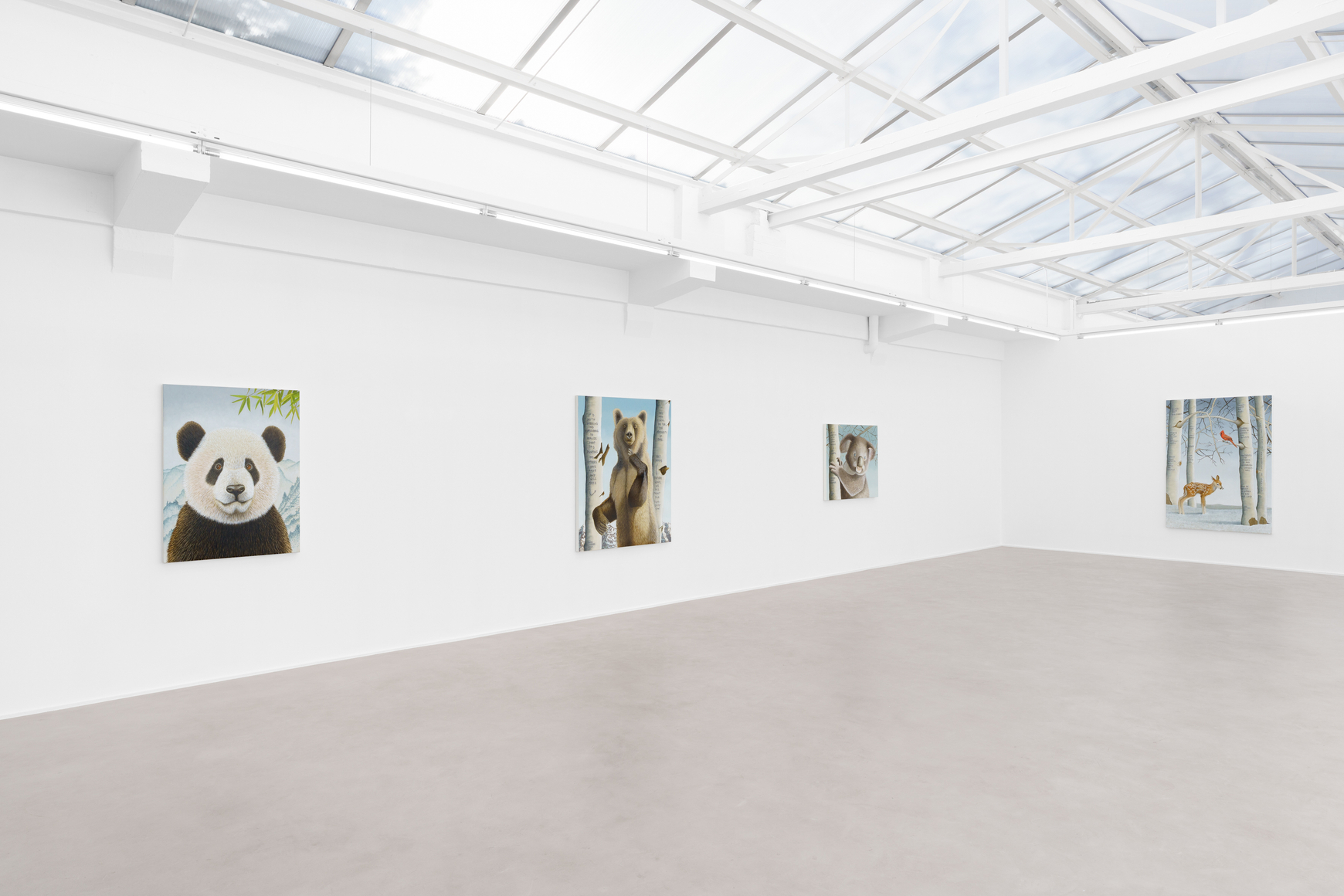
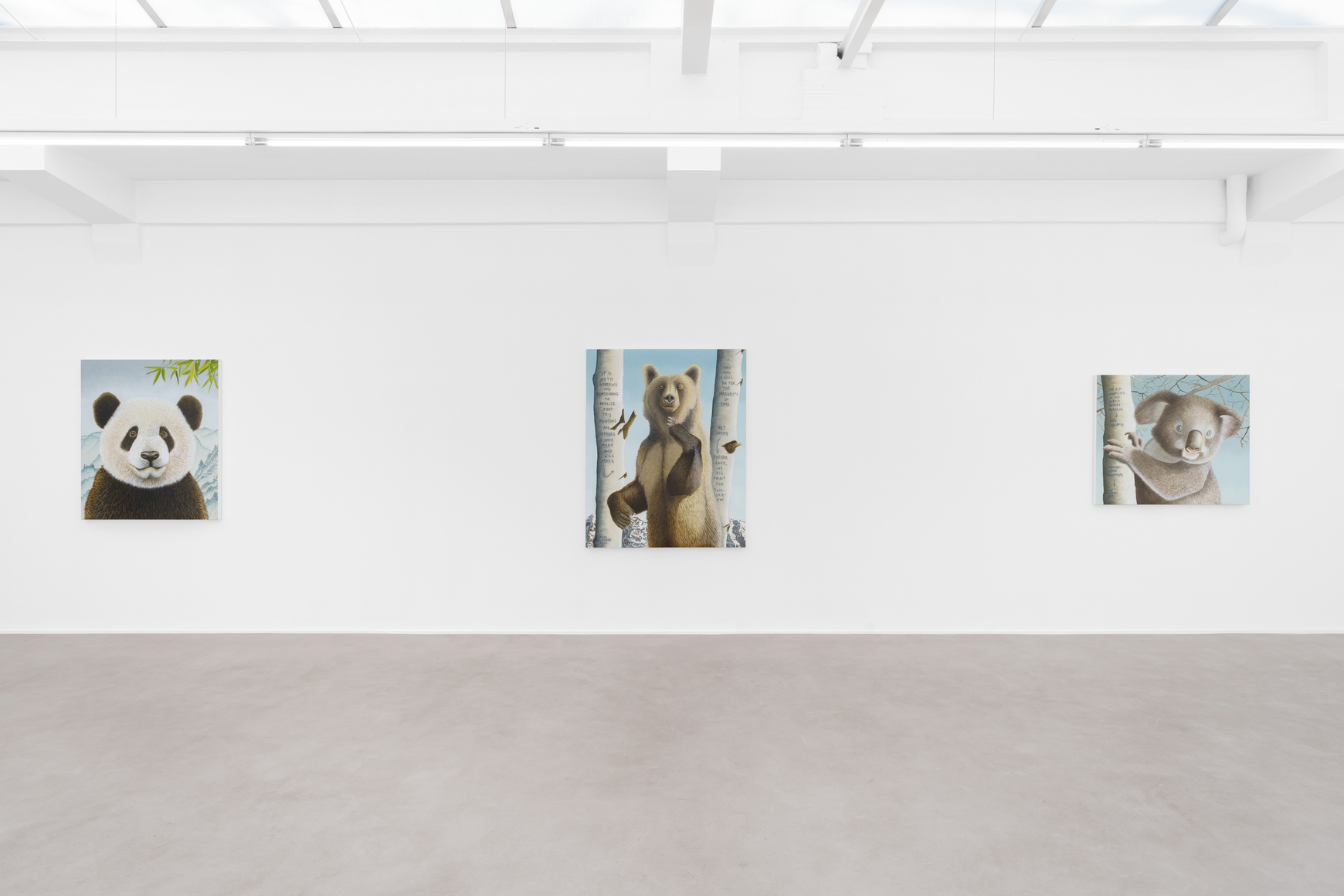
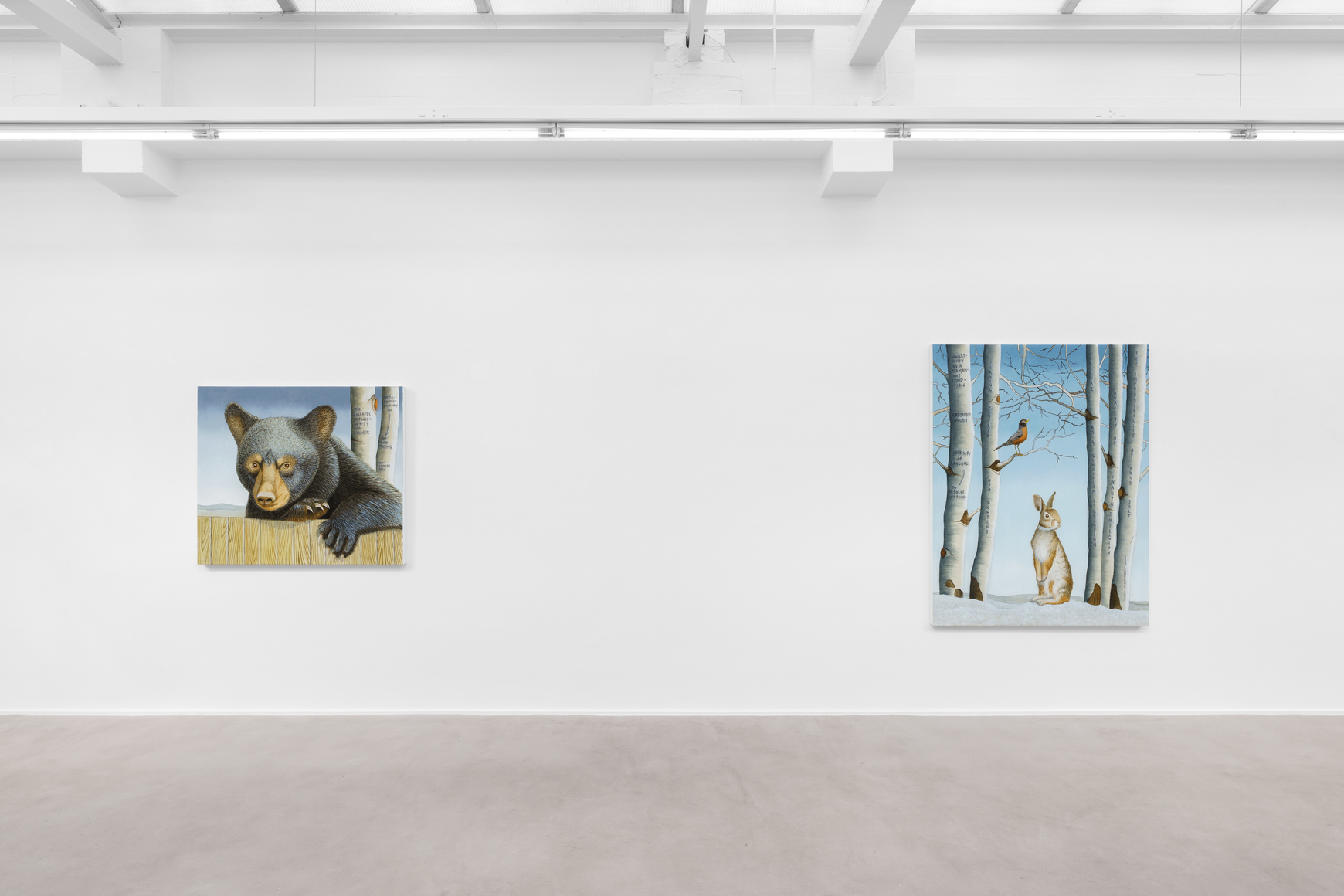
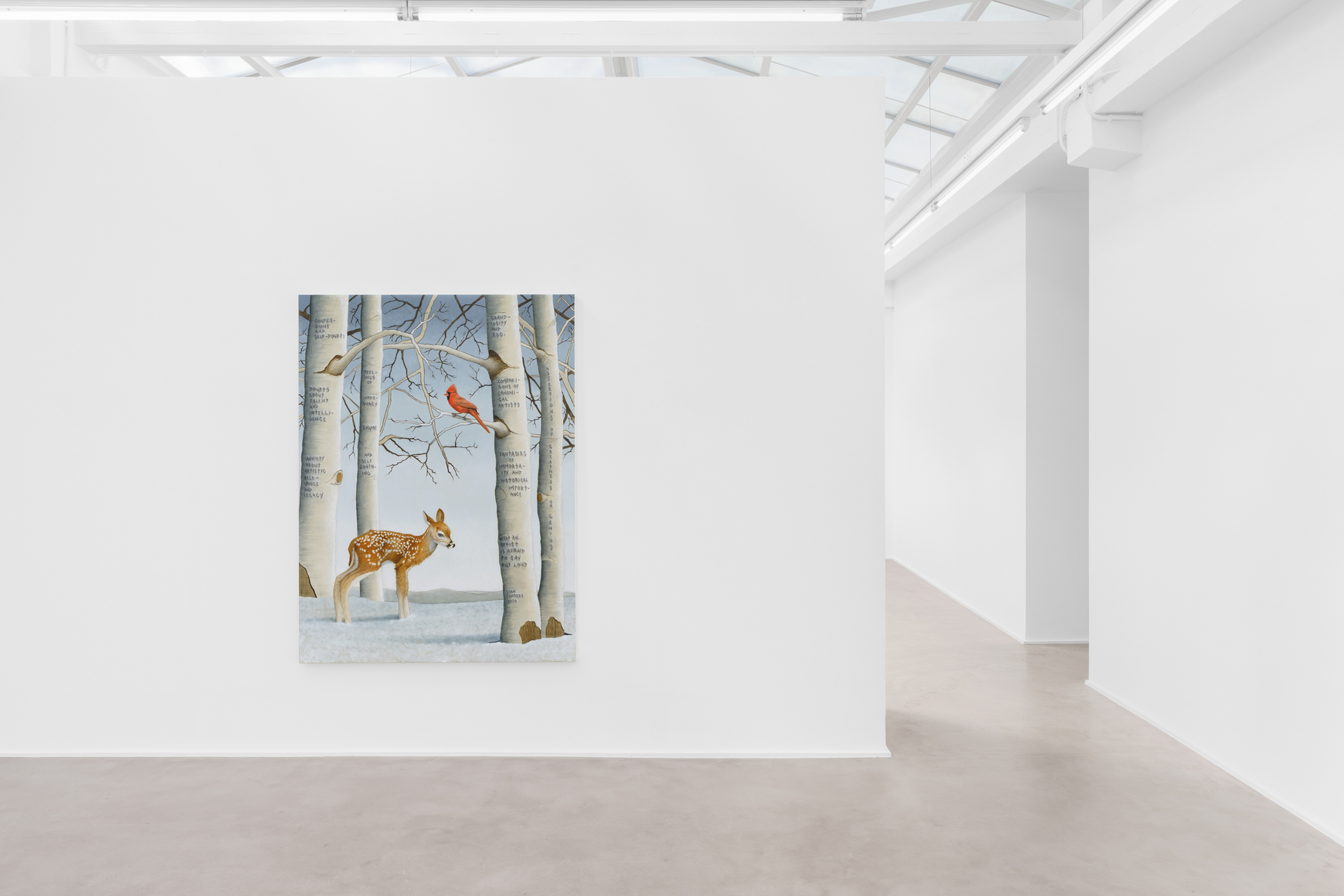
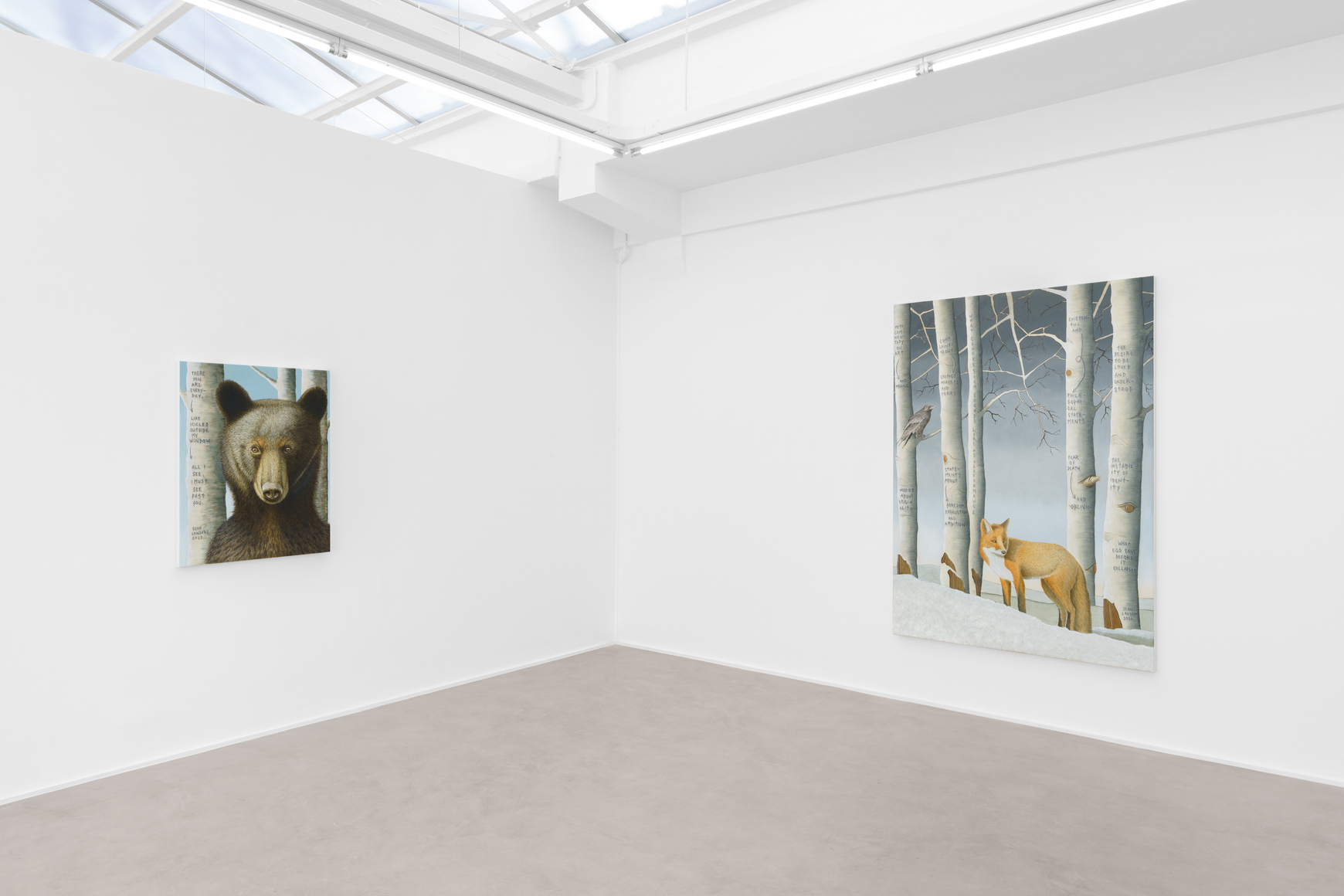
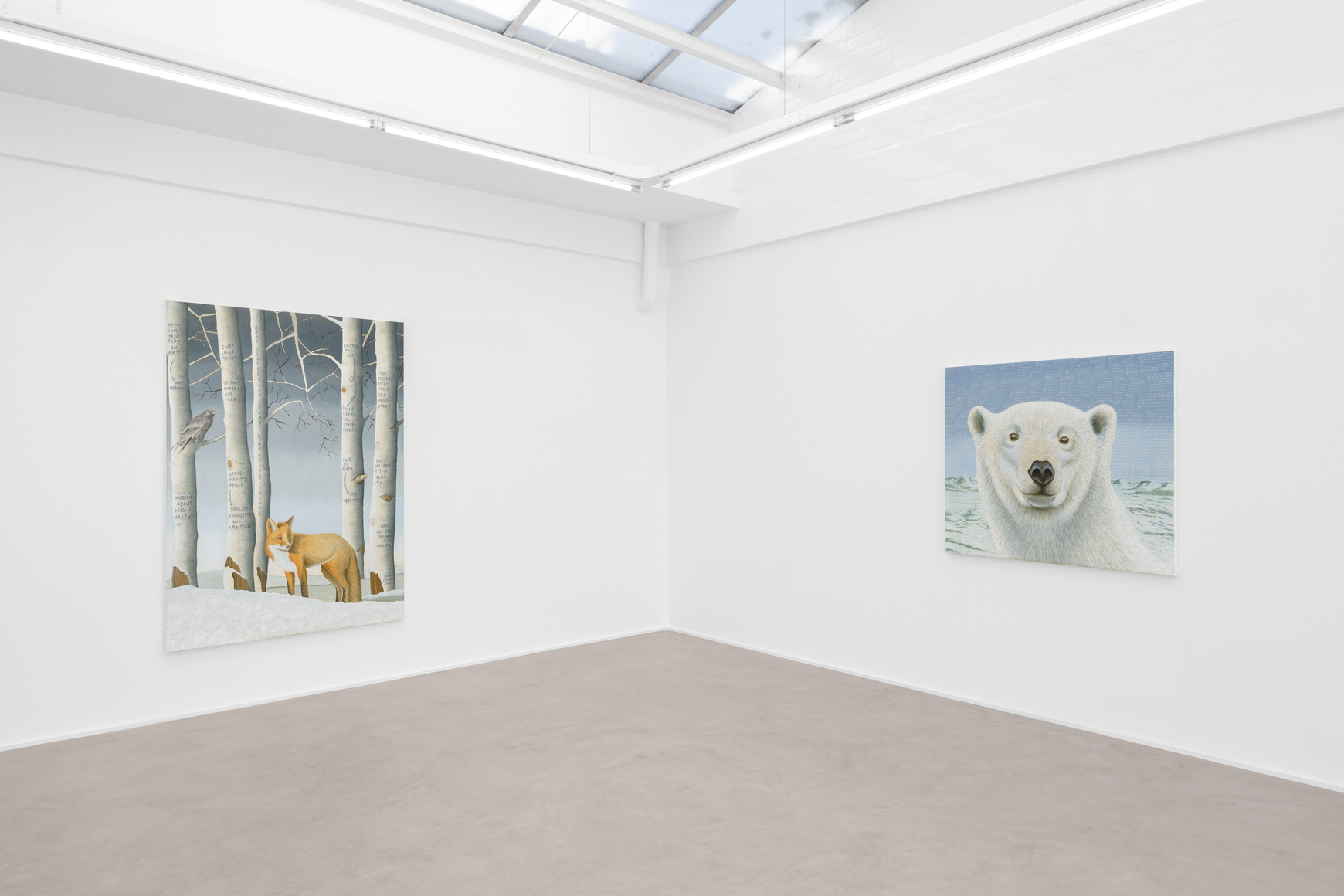
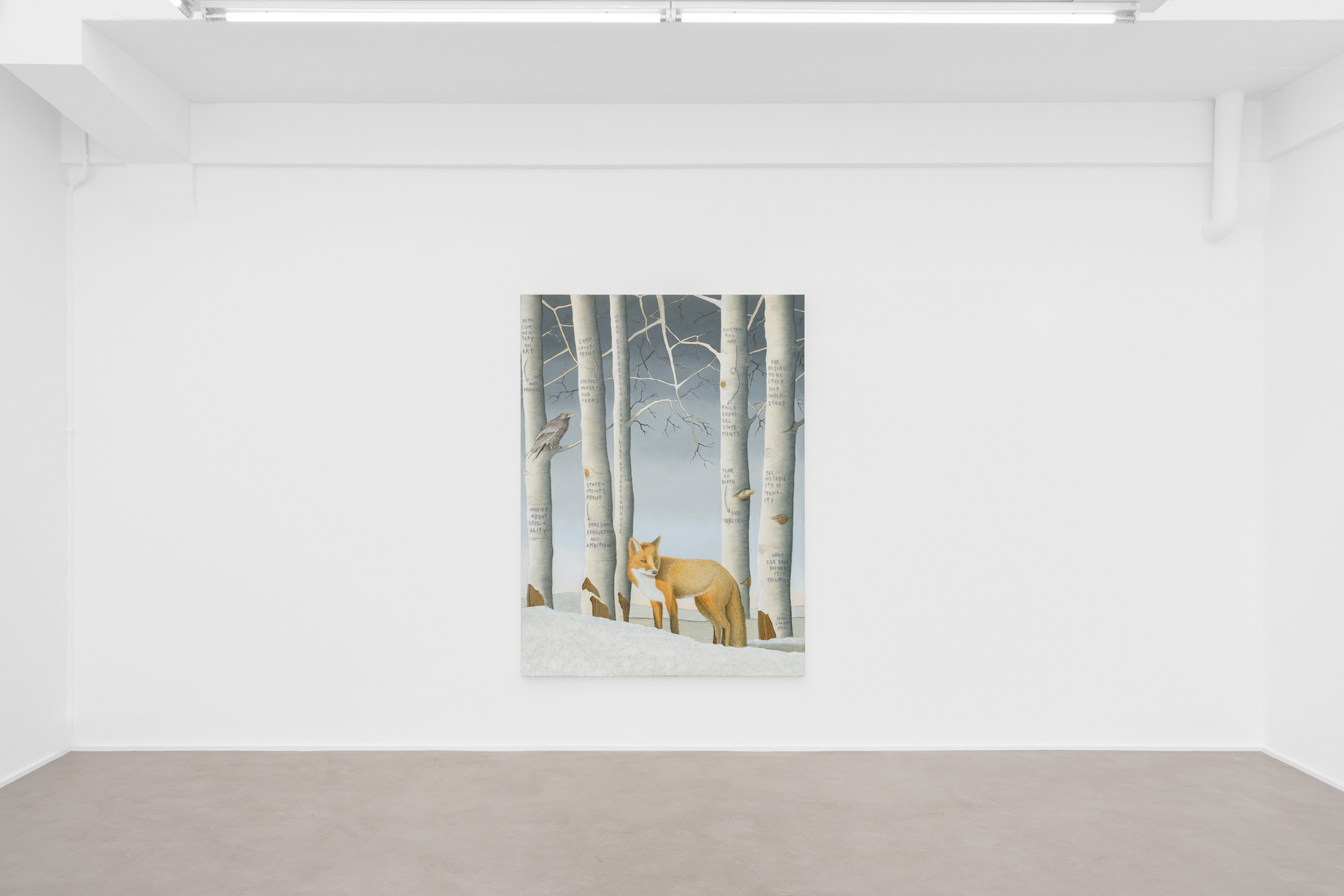
Sean Landers: Dismantling investigates the position and identity of an artist through a sustained interrogation with its own construction. Working primarily, though not exclusively, in paint, Landers has cultivated a visual lexicon unique to his individual exploration of the interior self, and as a formal subject in his paintings. Constructed through a unique form of visual language and representational systems, the artist explores the role and representation of the artist through distinct use of visual metaphor. His depiction of animals, situated within a mode of pastoral symbolism, evokes a history of American landscape painting that speaks to a Western expansionary recording of the natural world. Landers’s subjects are a unique set, amongst which bears, birds, and bunnies populate his sparse pastoral environments. The artist’s precise renderings evoke the stylistic qualities of early nineteenthcentury Animalier art, a traditional form of naturalist painting utilized to classify taxonomies of animals before the advent of photography. Instead of represented as species being observed as specimen in the wild, these characters often confront the viewers with a direct form of gaze. Painted with piercing clarity, the artist reverses the implied act of looking, posing the question of who, rather than what, is represented. Landers whimsically mobilizes the visual rhetoric of nineteenth-century Romanticism to complicate it, performing a personal irony positioned as an existential drift between painter and subject. Inscribed into the landscapes that frame his animal subjects are the artist’s own diaristic writings; these quasiaffirmations express converse ideas of doubt and ambition inherent to an artistic practice. Their integration into the surrounding environments, at times painted as carved into trees or scrolled across skies, evoke a silent but distinctly philosophical vocal resister for each painting. Rather than captured in the wild, Landers’s faunas are a record of the ephemeral dimensions of the subconsciousness; vehicles for a persistent inquiry into the depths of the interior self. However, through his artistic projection onto these silent archetypes, Landers wields these motifs less as symbols in a fixed iconographic program, but as proxies to rehearse the very limits of both hubris and fallacy. In doing so, the artist foregrounds the anxieties of artistic ambition with overt lucidity, artfully dismantling private doubt into a form of public spectacle.
Alex Turgeon
About the artist
Sean Landers works primarily as a painter, but he has also made sculptures, photographs, videos and audio works. René Magritte’s Période vache, a series of paintings in which the surrealist artist made a caricature of his own style, had a big influence on Landers’ artistic practice and it made him question his relationship as an artist to his work. Landers’ work explores the question of what it is to be a contemporary artist and what it means to make something that will last beyond the lifetime of the artist. In this sense his career can be seen as a long-lasting exploration of the same question, thereby turning his oeuvre into one dynamic whole.
His work has been exhibited in solo exhibitions, including at the Musée de la Chasse et de la Nature, Paris, France; Consortium, Dijon, France; the Contemporary Art Museum St. Louis; and the Kunsthalle Zurich; and numerous group exhibitions including Mirror Mirror, Kunsthal KAdE, Amersfoort, The Netherlands; The Everywhere Studio, curated by Alex Gartenfeld and Stephanie Seidel, Institute of Contemporary Art, Miami, CA USA; Magritte, Broodthaers & Contemporary Art, The Royal Museums of Fine Arts of Belgium, Brussels, Belgium; Human Interest: Portraits from the Whitney’s Collection, Whitney Museum of American Art, New York, NY USA; Picasso in Contemporary Art, Deichtorhallen Hamburg, Germany; Aquatopia: The Imaginary of the Ocean Deep, Tate St. Ives, UK; NYC 1993: Experimental Jet Set, Trash and No Star, New Museum, NY USA; Drawing Time, Reading Time, the Drawing Center, New York, NY USA; Busted, the High Line, New York, NY USA; Midnight Party, Walker Art Center, Minneapolis, MN USA, among others.